
B2B Lead Generation: Better Leads, Better Follow-Up
 AD BOOST INTELLIGENCE
B2B Lead Quality Map
From relevant business interest to a documented commercial opportunity.
- Is this the right organization?
- Is the inquiry genuine and relevant?
- Who owns the next action?
- Did the opportunity progress?
A lead becomes valuable through fit, accountable follow-up, and meaningful progression.
Essential lead metrics and terms
- Target account
- An organization identified as a potentially suitable customer based on legitimate service needs, relevant characteristics, geography, and the business's actual capabilities.
- Valid inquiry
- A genuine contact attempt from a potentially relevant organization, classified under documented rules that distinguish spam, duplicates, unrelated contacts, and existing-customer service requests.
- Qualified lead
- A valid inquiry meeting defined customer-fit criteria. Qualification may include service need, organizational relevance, territory, buying situation, and ability to progress appropriately.
- Marketing-qualified lead
- A lead meeting the organization's documented marketing-stage qualification rules. This is an internal lifecycle definition, not a universal guarantee of sales readiness.
- Sales-qualified lead
- A lead accepted under documented sales-stage criteria for appropriate commercial engagement. The definition should specify what evidence and approval are required.
- Cost per qualified lead
- Defined acquisition spend divided by qualified leads associated with the same reporting population. Specify included costs, attribution rules, and reporting period.
- Lead response coverage
- Eligible captured inquiries with a documented appropriate response attempt divided by eligible captured inquiries x 100. Automated receipt confirmations should be distinguished from substantive engagement.
- Opportunity conversion rate
- Qualified leads advancing to documented sales opportunities divided by eligible qualified leads x 100. Use consistent qualification and opportunity definitions.
- Sales cycle
- The elapsed time between defined starting and ending sales milestones, such as qualified opportunity creation and a final commercial decision.
- Customer acquisition cost
- Defined acquisition costs divided by acquired customers from an appropriately matured cohort. State which expenses and attribution assumptions the calculation includes.
Capture, qualify, and follow up
Start with the operating system responsible for turning business inquiries into accountable sales conversations. These guides focus on preventing lost opportunities, understanding customer intent, and maintaining accurate qualification records.
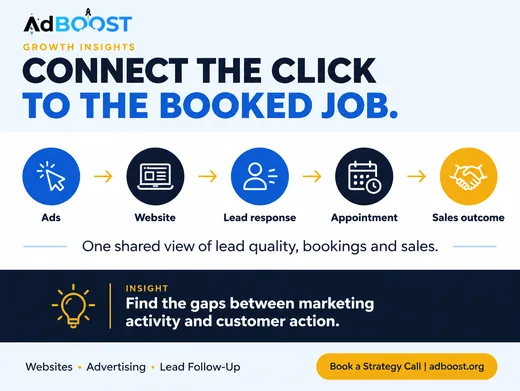
How to Stop Losing Leads Between Ads and Follow-Up
A business can generate plenty of leads and still struggle to book customers because inquiries disappear between advertising, the website, the CRM, and the…
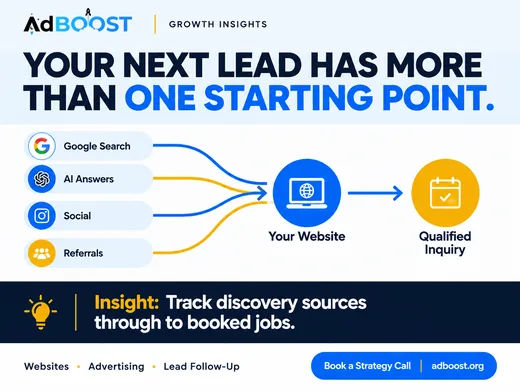
How Customers Find Local Businesses: Journey Guide
Customers discover local businesses through multiple paths, including search engines, maps, referrals, advertising, and AI-assisted research.
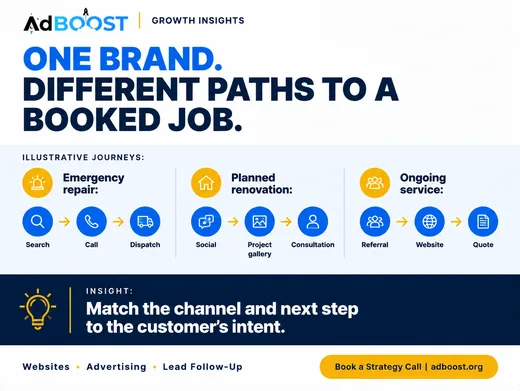
Customer Journey Mapping for Local Service Businesses
Customers can reach the same business through very different buying journeys because urgency, familiarity, risk, and the complexity of the decision change what…
Improve targeting, credibility, and conversion
A B2B prospect needs a reason to believe your company understands its requirements. Explore how positioning, trustworthy claims, relevant content, and informed customer decisions contribute to a stronger acquisition process.
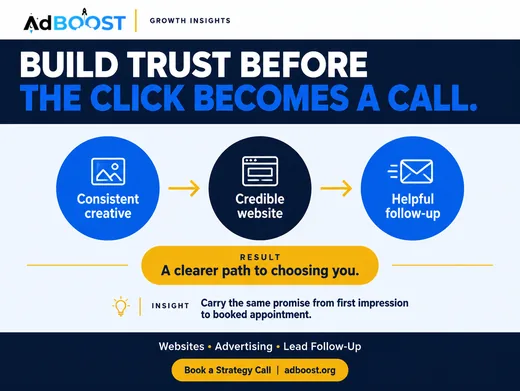
How Brand Trust Affects Lead Quality and Conversion
Brand strength can influence lead results by helping customers recognize your business, understand what you offer, and feel confident contacting you.
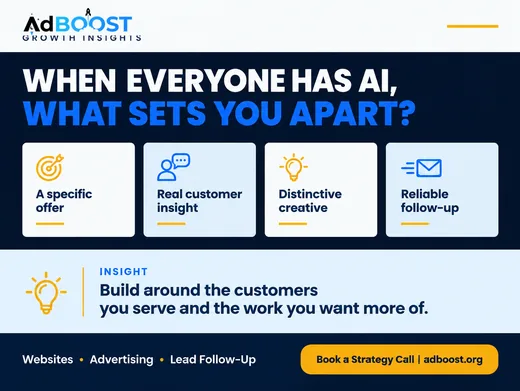
How to Stand Out When Every Business Uses AI
When competitors use similar AI tools, access to the technology alone becomes a weak reason for customers to choose one business over another.
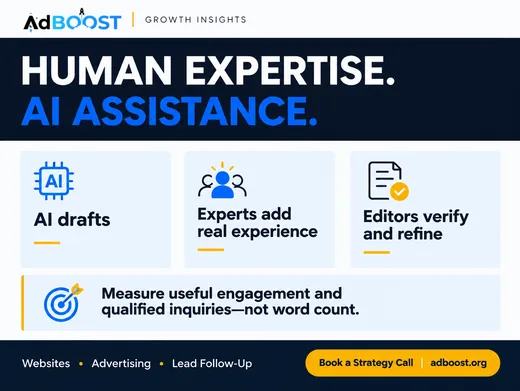
AI Content That Keeps Visitors Reading and Acting
AI-assisted content keeps readers engaged when it answers their actual questions, provides specific and accurate information, and helps them make a decision.
Connect measurement and marketing operations
Reliable systems make it easier to distinguish inexpensive inquiries from viable business opportunities. Use these guides to strengthen CRM handoffs, test marketing hypotheses, and assign appropriate automation responsibilities.
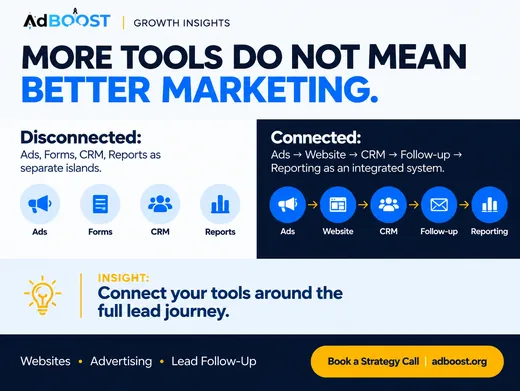
Marketing Technology Audit: Fix the System First
A better marketing system is not defined by how many applications a business purchases.
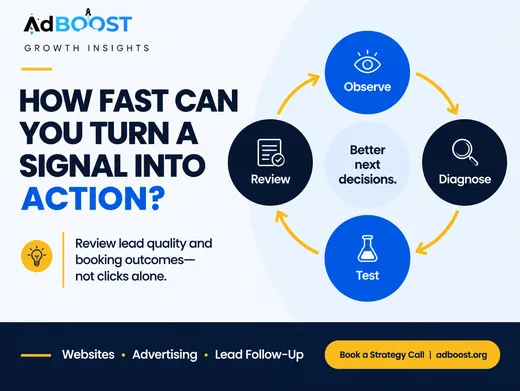
Marketing Testing: Learn Faster Without Wasting Spend
The speed of marketing improvement depends on how quickly a business can turn reliable observations into informed decisions, not how frequently someone changes…
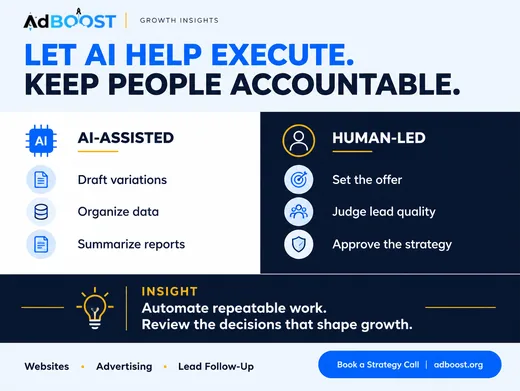
AI Marketing Automation: What to Automate vs. Keep
AI is useful for repetitive marketing production, organizing information, drafting variations, and preparing reports.
Reach new markets and relevant business buyers
Expansion requires accurate local service information and a repeatable learning process. These guides explain how to adapt business messaging, verify market fit, and transfer useful campaign knowledge between locations.
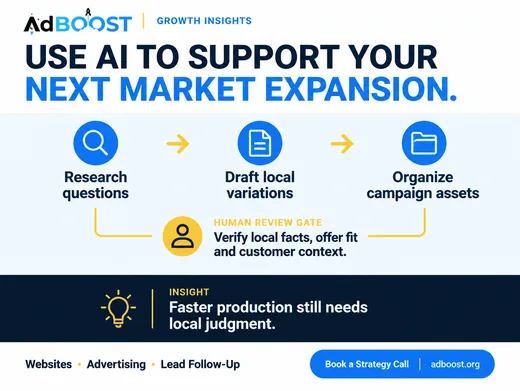
AI Marketing for Multiple Locations: Expansion Guide
AI can reduce the manual effort involved in preparing marketing materials for new locations, but it cannot verify whether an unfamiliar market will respond to…
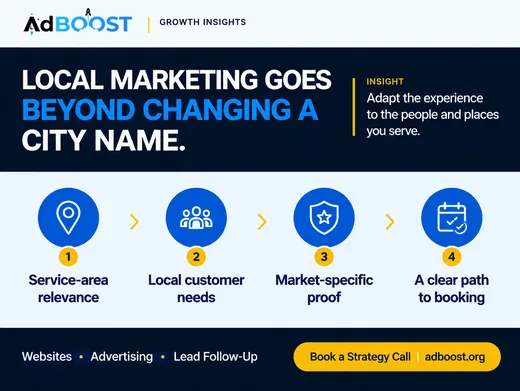
Marketing Localization: Beyond Translation
Translation changes the language of a marketing message.
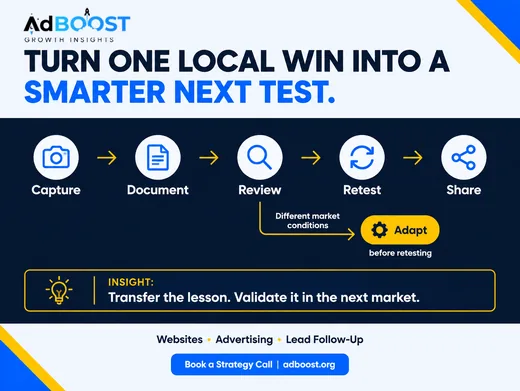
Multi-Location Marketing: Scale What Works
To scale a successful local campaign, document what worked, identify the conditions that may have contributed to the result, and test the underlying idea in…
Frequently asked questions
What is B2B lead generation?
B2B lead generation is the process of attracting relevant organizations, identifying genuine business interest, and creating opportunities for appropriate commercial conversations. Effective systems connect marketing, qualification, follow-up, and measurable sales outcomes rather than treating every form submission as a valuable prospect.
What makes a B2B lead qualified?
Qualification depends on the business's documented customer-fit criteria. Relevant factors may include the organization's service need, geography, project requirements, purchasing situation, and suitability for the provider's capabilities. A qualified lead is not necessarily ready to buy immediately, and definitions should be consistent across marketing and sales.
Should a B2B business focus on lead volume or lead quality?
Both matter, but volume without qualification can create unnecessary sales work. Monitor valid inquiries, suitable opportunities, response ownership, sales progression, and eventual customers. Compare acquisition costs using consistent definitions and sufficiently matured customer cohorts. The objective is sustainable commercial opportunity, not the largest possible contact database.
Can AI improve B2B lead generation?
AI can assist with drafting, organizing information, reporting, and suitable administrative automation. It does not independently verify customer fit, create legitimate buying intent, or replace accountable sales judgment. Use AI within documented workflows, review consequential outputs, protect customer data, and evaluate actual qualified outcomes.
Review Your B2B Lead Process
Find where targeting, qualification, CRM handoffs, or follow-up may be preventing suitable business inquiries from becoming opportunities.
Review Your B2B Lead Process